Everything I've Learned about Hashimoto’s Thyroiditis
I started my personal health crusade in 2023. I always felt tired and low energy, and even though I was working out and moving a lot, I always felt exhausted and each step felt like I was dragging myself through mud.
In March 2024, I got my first comprehensive blood test that indicated I had elevated thyroid hormones: my TSH, Thyroid Peroxidase antibodies (TPOab), and Thyroglobulin antibodies (TgAb) were all elevated.
TSH:

TPOab and TgAb:

I immediately saw an endocrinologist, who proceeded to tell me that I was fine since my thyroid was mostly within range, and to just take some Vitamin D pills to get more energy. He told me I was going to develop Hashimoto’s in the future and my thyroid might stop working at some point, but until that happens, there’s nothing we can do.
I didn’t realize at the time that “in range” for a “healthy” adult is a huge range and does not mean “optimal” health for me. I lost around a year of action because I just didn’t know that there were other steps to take outside of traditional healthcare.
I’m going to break down everything I’ve learned about Hypothyroidism and Hashimoto’s and point to other resources to learn more. I’m also going to provide resources outside the traditional healthcare system that might be considered a little woo.
None of this is medical advice.
I. Brief Education: Understanding the Thyroid, Hashimoto’s and Hypothyroidism
What is the thyroid?
“Your thyroid is a small, butterfly-shaped gland located at the front of your neck under your skin. It’s a part of your endocrine system and controls many of your body’s important functions by producing and releasing (secreting) certain hormones. Your thyroid’s main job is to control the speed of your metabolism (metabolic rate), which is the process of how your body transforms the food you consume into energy. All of the cells in your body need energy to function.
When your thyroid isn’t working properly, it can impact your entire body.”
“Thyroid hormone is the hormone that controls your body’s metabolism, the process in which your body transforms the food you eat into energy. The two main hormones your thyroid releases — thyroxine (T4) and triiodothyronine (T3) — collectively make up thyroid hormone.” (Cleveland Clinic)
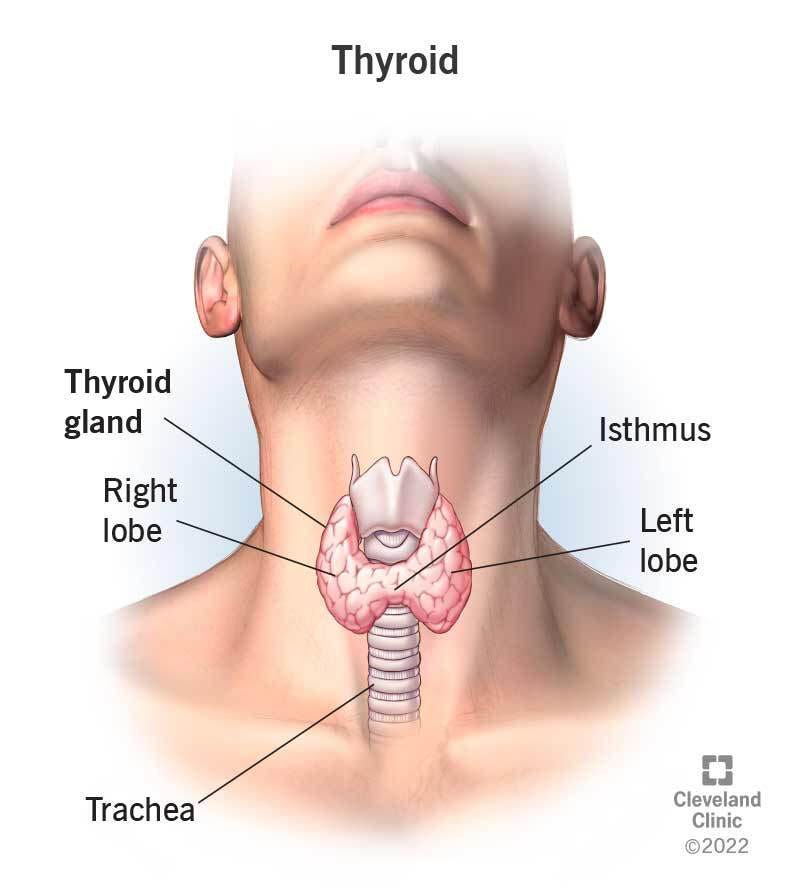
Symptoms that your thyroid might not be functioning well
Fatigue, low energy
Weight gain
Sensitivity to cold
Constipation
Dry skin and hair
Depression
Muscle aches
Joint pain
Heavy or irregular periods
Brain fog, memory problems
Puffy face
For Hashimoto’s and Hypothyroidism, they go hand in hand but they are not the same.
“Hypothyroidism happens when the thyroid gland doesn’t make enough thyroid hormone. This condition also is called underactive thyroid. Hypothyroidism may not cause noticeable symptoms in its early stages. Over time, hypothyroidism that isn’t treated can lead to other health problems, such as high cholesterol and heart problems.” (Mayo Clinic)
“Hashimoto’s disease is an autoimmune disorder affecting the thyroid gland… In Hashimoto’s disease, immune-system cells lead to the death of the thyroid’s hormone-producing cells. The disease usually results in a decline in hormone production (hypothyroidism).” (Mayo Clinic)
So, you can have hypothyroidism without having Hashimoto’s, and you can have Hashimoto’s without having hypothyroidism…yet. If you have both, you can treat your hypothyroidism without completely helping your Hashimoto’s, and vice versa. They affect each other, but fixing one doesn’t guarantee fixing the other.
II. Thyroid Hormone Tests
How do you find out if your thyroid isn’t functioning properly? Usually, you work with an endocrinologist to run these tests:
Main thyroid function tests:
Thyroid-stimulating hormone (TSH) test.
Total T4 (thyroxine) test.
Free T4 (FT4) test.
Total T3 (triiodothyronine) test.
Free T3 (Ft3) test.
Reverse T3.
Antibody tests - The presence of thyroid antibodies might mean you have an autoimmune disorder like Graves’ disease or Hashimoto’s disease.
TPO (thyroid peroxidase antibodies)
TGAb (thyroglobulin antibodies)
A good resource to understand what each test means.
Endo’s don’t always test FT4, FT3, Reverse T3. Many endocrinologists will outright say no; don’t waste too much time trying to convince one. Find another one. Ideally, you’re able to convince them to test these to get a full view of your individual thyroid hormone levels.
Worst case scenario, you can buy at-home thyroid testing kits out of pocket that will test all of these.
Outside of traditional healthcare, there are thyroid/metabolism experts like Broda Barnes and Ray Peat who advocate that you can get a glimpse of how your metabolism is doing by tracking your body temperature at home. How to take and track your temperature at home.
Additional Tests to Consider
If you’re hypothyroid, here are other things you should get tested for/look out for:
Low Iron
Test your Selenium, Zinc, and Iodine levels before supplementing
Vitamin D
Low B12
High cholesterol (LDL)
III. Navigating Traditional Hypothyroid Care
Where Traditional Medicine Works
If you are clearly hypothyroid, endocrinologists will treat you. They’ll usually prescribe a form of T4, which is the inactive form of thyroid hormone and is converted to T3 in the body. T4 is the most commonly prescribed thyroid hormone in the US.
However, sometimes you won’t feel better on just T4 even if your numbers are looking better. This is when having your endocrinologist add T3 can be useful. T3 is the active thyroid hormone and has a short half-life, so your endo might tell you to break up into multiple doses in a day.
A big caveat here, finding an endocrinologist who will prescribe T3 is hard. You’ll want to find an endo who specializes in thyroid care. I’ve had good luck with Paloma Health, but they do have a membership fee and will still depend on which endocrinologist you find.
Getting the Right Tests and Optimal Range
You are in range but not optimal. Endocrinologists use a wide range for what is considered normal levels for TSH. According to Cleveland Clinic, adults 21 to 99 years old can have a range from 0.27 – 4.2 uIU/mL (link). You can experience hypothyroid symptoms pretty much anywhere in this range. An optimal TSH is likely under 2, but you want to find an endocrinologist who treats you AND your symptoms.
Don’t rely solely on TSH. Your FT4 and FT3 should also be in range. A great endocrinologist doesn’t go off of just TSH, they want to optimize your T4 and T3 levels too.
Getting the Thyroid Meds That Work For You
There are 3 options for thyroid meds: T4 only, T4 + T3, Natural Desiccated Thyroid (from the desiccated thyroid glands of pigs or cows and provides T4 + T3 hormones).
A good endocrinologist will experiment alongside you to find the optimal dose for you.
I was just outside the optimal range, but I was having very obvious hypothyroid symptoms. I saw 3 endocrinologists who dismissed me and my symptoms before finding one who would actually listen to me and treat me. Advocate for yourself and keep looking for a great doctor.
IV. Beyond Medication: Addressing the Autoimmune Root
Figuring Out Hashimoto’s Care
Hashimoto’s is first and foremost an autoimmune condition, which means you’re going to need to holistically tackle your life and health.
For people like me, who have the beginning stages of Hashimoto’s and hypothyroidism, there’s not much endocrinologists can do.
Prescribing thyroid hormone is pretty much the only way that traditional endocrinologists treat Hashimoto’s, but even in this case, they’re treating the resulting hypothyroidism that comes from the destruction of your thyroid by Hashimoto’s.
If you have positive antibodies, immediately push to get an ultrasound of your thyroid. This will help your doctor and you physically track your thyroid inflammation. An ultrasound will usually examine the thyroid gland’s size, texture, and structure, and monitor any nodules.
How to Treat Your Hashimoto’s: Non-Traditional Approaches
We’re about to wade into how to treat your Hashimoto’s outside of the traditional healthcare system. Hopefully this is a way for you to understand care options and point you to places to do more research and figure out what works for you.
Mental Preparation
Before starting anything, try spending some time getting yourself mentally ready. Autoimmune conditions often require significant lifestyle changes to be healthy. This is going to sound woo woo, but you need to have faith that you will figure this out.
N=1; what helped me is treating my life as an experiment and not identifying with my chronic illness. What works for other people might not work for you and vice versa.
Find a higher purpose. I want to be as healthy as possible to have kids; it’s easy to give up gluten when I’m doing it in service of my future kids.
Treatment strategies
I’ve been working with a health coach to help me really dial in my nutrition and supplements. It’s been insanely useful for me because I’ve paired what I’m doing with my coach with my endocrinologist prescribing me medication.
Diet - is the primary way to treat autoimmune conditions. The gut is connected to chronic inflammation and some studies show that changes in diet can affect inflammation and thyroid.
Gluten and Dairy and Soy free - Gluten seems to be a huge trigger for autoimmune issues. I personally went gluten free, but not dairy free, and saw an improvement in my antibody levels. This is likely the first and easiest place to start.
One note of caution: if you’re going gluten free, don’t try to replace all your food with ultra-processed gluten alternatives. These are usually full of fillers and triggering ingredients.
The Autoimmune Protocol - this is an extreme elimination diet where you temporarily remove potentially irritating foods and then slowly reintroduce them back into your diet to understand what triggers you. This takes at least 6 months to do correctly, and there are tons of guides online or on YouTube.
Do not fast! Fasting can increase the stress on your body. My highest TSH levels always come after I’ve been fasting for a while.
Sleep - just get good sleep. No way around this. Also, look into getting morning sun and evening sunset to set your circadian rhythm.
Exercise - if you’re not exercising at all right now, try walking. If you are already exercising, try to do lower intensity workouts because your body is inflamed, and HIIT or long, hard workouts can add more stress to the body.
Medications - most doctors will not prescribe this, but Low-Dose Naltrexone (LDN) is a medication that can be used off-label to manage symptoms of various inflammatory, chronic pain, and autoimmune conditions.
Other things that can help lower your antibodies or help your thyroid in general:
Eliminate seed oils - I only use Extra Virgin Olive oil, grass-fed butter/ghee, and coconut oil
High quality Vitamin C (do not use ascorbic acid)
Selenium (always test first. It’s easy to go over and get selenium toxicity)
Vitamin D
Myo-inositol
Optimize your iron/ferritin levels - I take desiccated beef liver
Magnesium
Red Light Therapy on your thyroid
Neck massages
As you make these changes, try to retest your Thyroid every 3-6 months.
VI. Stay hopeful
The chronic illness/autoimmune journey is deeply personal and requires you to become your own health advocate. My hope is that this arms you with a little bit more knowledge than when you started. Traditional healthcare systems are not meant to help you navigate chronic issues, but the point of this knowledge is to understand the limitations of the system and use it to your advantage.
VII. Resources
Hashimoto’s 411 Facebook group (if you post with your blood test results, they’ll help you)
Andra Sitoianu, ND; Twitter - search for Hashimoto’s